“Luck favors the prepared.” – Edna Mode, The Incredibles
By creating a grant research strategy, organizations can save valuable time and energy by not applying to funders whose interests don’t align with their priorities or for which they are unknowingly ineligible. While some foundations may support a broad range of causes, many funders have specific areas of interest and they are looking to support nonprofits who are doing work in those realms. Some funders also have specific eligibility guidelines that you might have to dig a little deeper to uncover.
Best Grant Research Databases and Tools
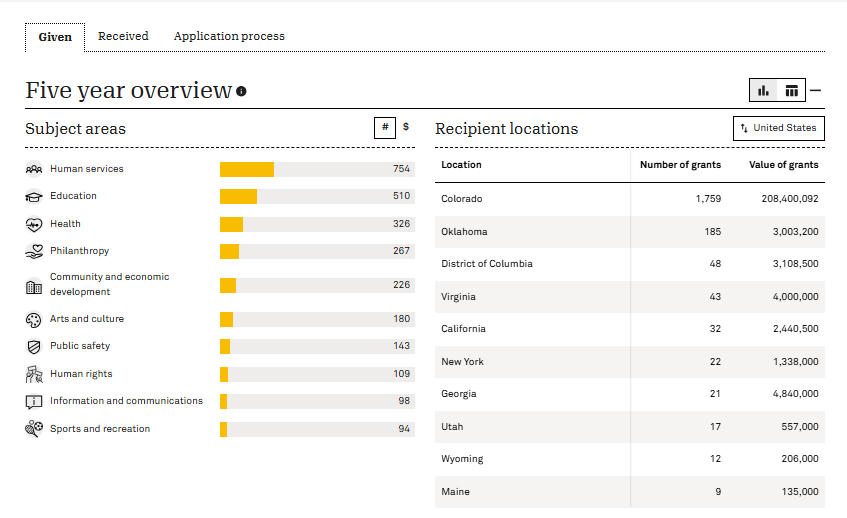
There are several grant research databases and tools available to help identify “good fit” funders. Candid Foundation Directory is one of the more popular databases that we utilize here at L Pro. They recently did a major update of their platform that allows you to create projects and save searches to a prospects list. This recent update makes it a much stronger competitor in the world of grant research databases, in our opinion. If you can’t afford a subscription to Candid Foundation Directory, many public libraries offer access at no charge.
Example of the Candid Foundation Directory Platform
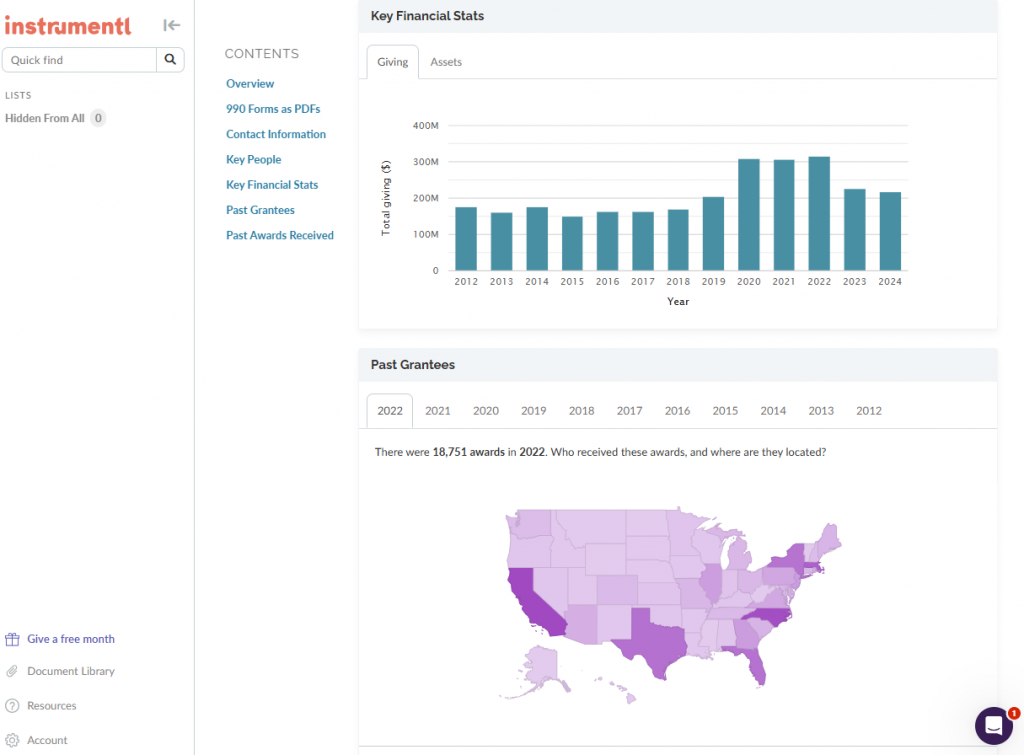
Recently, L Pro has also added Instrumentl to our grant research toolbox. Instrumentl is a great resource for our growing organization, but again it is a tool that requires a subscription.
Our Research Strategy Manager at L Pro prefers to use Instrumental versus Candid Foundation Directory because the Instrumentl platform is more user-friendly. She also finds Instrumentl faster than Candid for looking into potential grant funding opportunities because of the way the platform summarizes everything from the 990 and the funder website into one cohesive summary. Each funder is presented as a quick snap shot that summarizes everything from average giving amounts to eligibility and ineligibility, with the ability to go more in depth in each area.
She also prefers Instrumentl’s sorting feature for looking at funding history. Instrumentl allows users to search by name, state, or even city to see who a funder has supported in the past.
Additionally, Instrumentl’s projects feature enables users to create a search for a project or program and save it. The search continues to collect new funder matches (and labels them as new) on an ongoing basis. Due dates and other information are updated in real time and users receive alerts when a funder makes a change. Instrumentl is a valuable tool which saves time and helps determine the alignment of funders more accurately.
Example of the Instrumentl Platform
All of that being said, Candid’s latest update does enable very similar tasks in about the same amount of time.
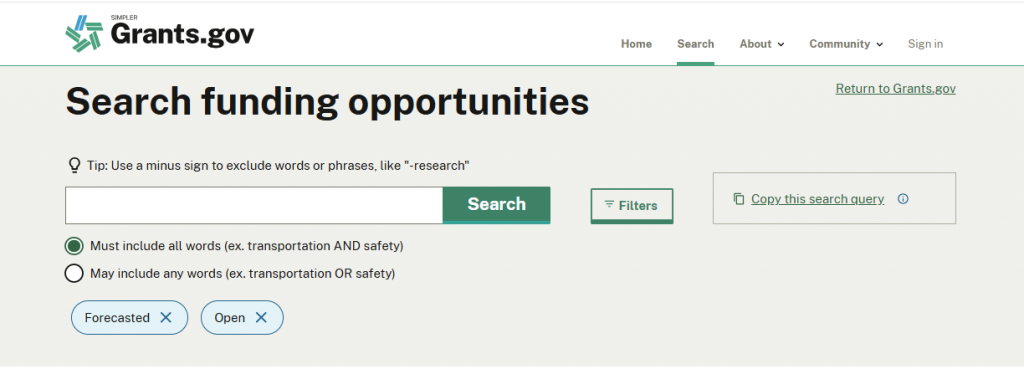
Grants.gov offers a free search tool for federal grants so it will not include foundations, corporations, trusts, or any state or county specific opportunities. They are currently working on upgrading their features for this platform.
Example of the Grants.gov Platform
Organizations looking for a free way to search for grants can try using AI or searching the internet, but for the moment databases are much more accurate than AI and more efficient than web searches because they provide tailored responses specific for your mission, programs, geography, etc. Another option is to do what we call “reverse research” by looking at who is funding similar organizations to yours. Often this information can be found on an organization’s website or annual report.
Building Your Grant Strategy
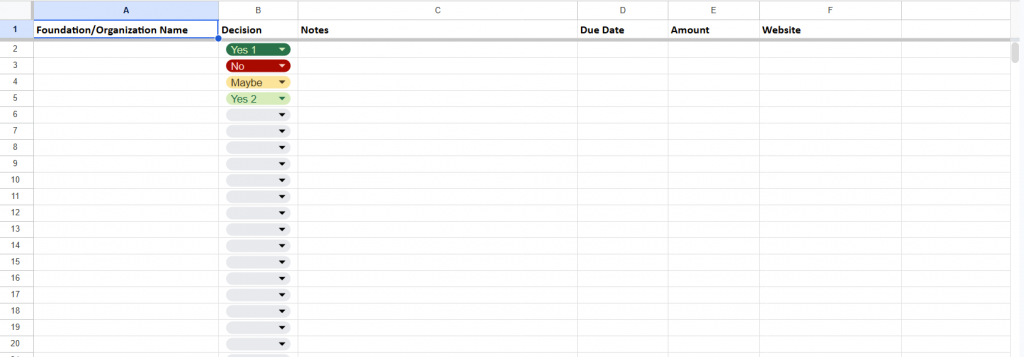
Once you’ve researched and identified funders and grant opportunities that are in strong alignment with your nonprofit organization, you can start building a customized grant strategy. Here at L Pro, we do this on behalf of our clients by prioritizing the strongest fits and delineating those that should be kept in mind for the future or eliminated from the prospect list. By prioritizing the strongest alignments, clients can focus their efforts to increase their chances of success. While a “throwing darts at the board” method may be tempting, it is typically not as effective as a carefully crafted strategy. Since grant writing can be time consuming, it’s important to focus on quality over quantity.
A Preview of L Pro's Grant Research Summary
If you’re planning to apply for a grant, keep in mind that funders do occasionally change due dates and funding focus areas so it’s important to have a system for regularly checking on planned opportunities. Additionally, some funders have off-cycles meaning that you can’t apply for the same grant each year and must wait until a set amount of time goes by to apply for that funding again.
Research Never Ends
Researching grants is not something you can do once and forget about. There are always new opportunities and foundations to be found or funders that make changes. Here at L Pro, our Research Strategy Manager is dedicated to ongoing research so we are continually finding and adjusting opportunities for our clients. If you’re doing your own grant research, be sure to set some time aside at least once a year (the beginning of a new fiscal year can be an ideal time) to research new opportunities that can be added to your grant calendar for the upcoming year. The bottom line is, a successful grant strategy begins with a successful grant research strategy.
How does your organization approach grant research? We’d love to hear what works for you in the comments!