
2025: A Year of Trials and Denials for Nonprofits
Did you receive way more denials than you anticipated from foundations this year?
Are you wondering: What the heck is going on?
We’ve felt it too – and we’ve been in this industry for a while. A recent survey from the Center for Effective Philanthropy (CEP) found that:
62% of nonprofit leaders have experienced or anticipate funding losses from foundations in 2025.
If you’re in the grant hot seat, a high rate of denials can be disheartening. You might start to question the strength of your narrative, the quality of your funder research and the efficacy of your grant strategy, or even the effectiveness of your writer. (No, that would NEVER happen!) While these may be valid concerns to address in the new year, the most effective way to learn why your grant proposals are being denied is to:
Ask.
We’ve learned a lot by simply asking funders for feedback. This feedback helps us make decisions about whether to apply again and how to improve our request.
This year, we recognized several trends in funders’ responses that helped us understand how they are making decisions given this year’s turbulence in the nonprofit sector. We also dug into insight from top industry sources and it’s clear: Funders are having a rough year, too.
55% of foundation leaders indicate that the current context has had a negative impact on their foundation’s progress toward goals.
Funders are facing their own set of challenges and they’ve been strategizing to make the best decisions possible to continue their mission and provide as much support as possible.
Funder Trend #1: Swimming in Grant Proposals
Yes, this is the most rote funder response; however, funders have been inundated with applications this year. According to CEP, 87% of foundation leaders saw increased demand for funding in 2025. At L Pro, we’ve received denials indicating that funders are seeing upwards of five times their usual number of applicants. When they say they had to make difficult decisions, they mean it.
Why such a drastic increase? While there are multiple variables at play, two stand out this year.
Government grant funding uncertainty and change
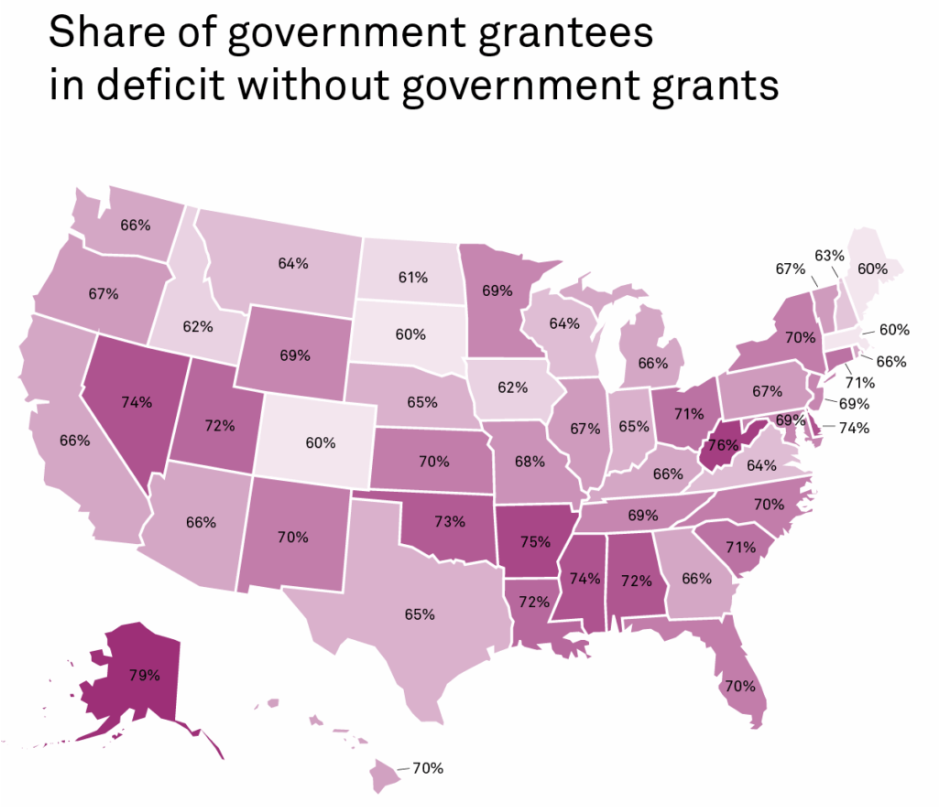
Funding freezes and cuts, department closures and reductions, and new restrictions related to D.E.I. programming have driven government-funded nonprofits to pursue more grants from foundations to ensure their stability. Around 30% of nonprofits in the United States rely on government grants – to the tune of $303 billion each year. A third of these nonprofits rely on government grants for over 50% of their revenue. However, private foundations would have to increase their grantmaking by 282% to make up for the loss of government grants (Candid).
Increased demand for nonprofit services
Similarly, changes to federal programs and services have meant increased need from nonprofits’ communities. In fact, 81% of nonprofit leaders have experienced or anticipate experiencing increased demand for their services in 2025 (CEP). To meet this need, these nonprofits are seeking additional sources of funding to ensure their communities’ basic needs are met.
📝 Your takeaway: If your requests are being denied due to the increased volume of applicants, plan to try again in the next relevant cycle – and stay in touch. Keep the funder in the loop to demonstrate your commitment to a partnership with them and your confidence in your organization’s alignment with their priorities.
Funder Trend #2: Meeting the Moment
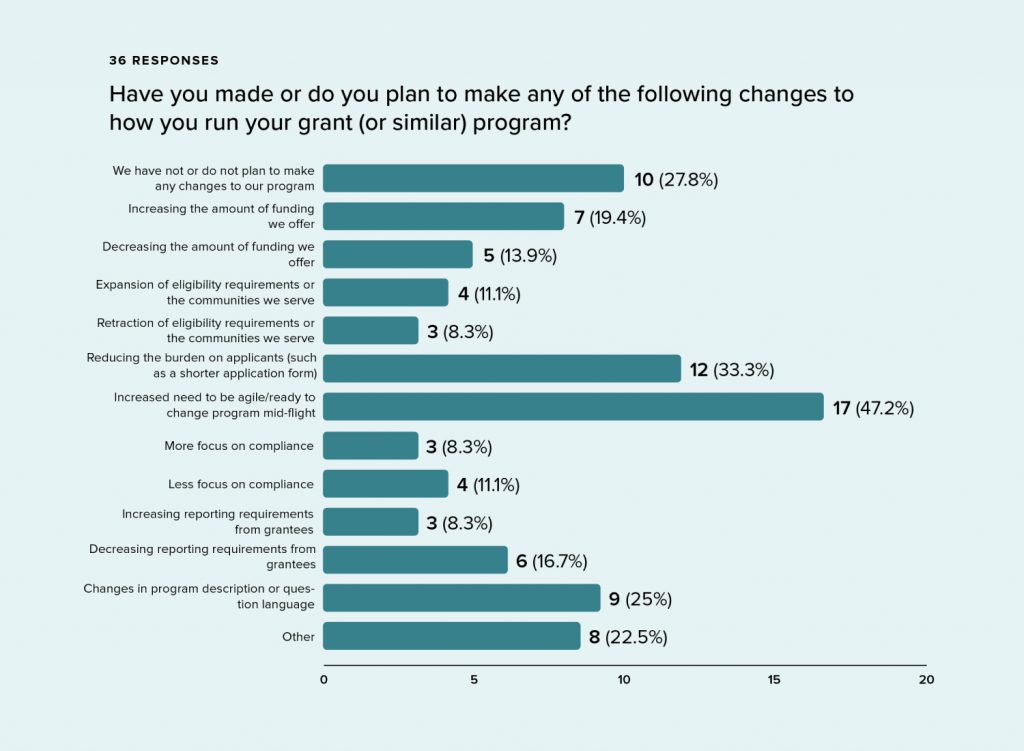
Funders had to strategize to ensure every dollar made the most meaningful impact within their wheelhouse and in keeping with their mission this year. Strategies have included:
- Funding more applicants at lower amounts.
- Funding requests that impact the greatest number of individuals.
- Prioritizing current grantees.
- Shifting to provide more unrestricted funding.
- Increasing the amount of funding available, including opening additional cycles to help fill funding gaps. This year, 30% of foundations increased their payout in response to the current context. And 64% provided emergency/rapid response grants (CEP).
📝 Your takeaway: Tend to your existing funder relationships and be transparent about your needs. You may be able to increase your next request, receive more unrestricted funding or get a grant renewed without re-applying. Also, be curious about your funders’ experience with this year’s tumult. There’s much to gain when you cultivate strong relationships with your grant funders.
Funder Trend #3: Tightening Up Protocol
Several funders are changing their processes for future cycles. Around 39% of foundations did so this year, and 16% are considering doing so (CEP). Changes include:
- Shifting to an invite-only process
- Adding a pre-application or letter of interest (LOI) component to the process
📝 Your takeaway: It’s always good practice to double-check whether a grantmaker’s processes have changed from year to year, but it will be especially pertinent in 2026. Sign up for newsletters from grantmakers on your list, follow them on social media and stay engaged to make sure you don’t miss key changes.
Looking Ahead to 2026
Heading into 2026, uncertainty remains. However, the best approach is to stay calm and carry on. If you integrate even some of these takeaways and a deeper understanding of the grant funding landscape into your grant strategy, you’ll be better equipped to find success in 2026. The worst thing you can do is stop your grant writing efforts entirely. You have everything to gain and nothing to lose from being strategic in your requests, getting to know your funders, and maintaining open lines of communication.
If you need assistance optimizing your grant strategy for 2026, we’re here to help. Reach out to us at info@lprowriting.com for a one-hour fit call/consultation, and subscribe to our newsletter for grant strategy advice and best practices!